COOL MAMA CLUB
A Design That Smiles—Before You Even Stitch It
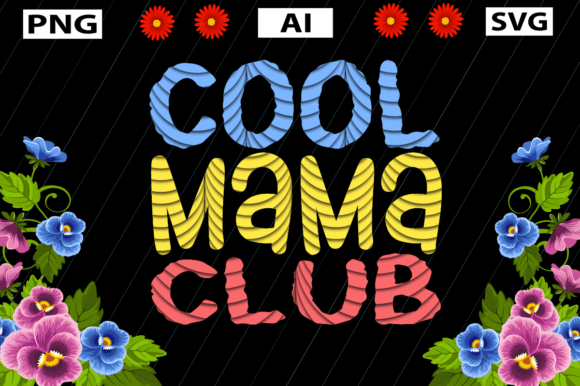
First impression? COOL MAMA CLUB lands with warmth and wit—not loud, not cutesy, but effortlessly confident. As a designer who’s stitched hundreds of motherhood-themed pieces for Etsy shops, boutique orders, and custom baby shower totes, I appreciate how rare it is to find a graphic that balances personality with embroidery practicality. The layout feels intentional: clean lettering with subtle curve and spacing, no fussy flourishes or fragile serifs. It reads instantly at 3–4 inches wide—the sweet spot for sweatshirt chest placement or tote bag front panels. This isn’t just a phrase slapped on a template; it’s a design asset built for real-world wear.
Where COOL MAMA CLUB Actually Shines (and Where It Needs Thought)
I recently tested COOL MAMA CLUB on a medium-weight organic cotton tote for a local mom-owned café’s Mother’s Day pop-up. Paired with soft heather grey thread on natural canvas, the result was relaxed, elevated, and unmistakably handmade. No pixelation, no stitch crowding—just clear, legible satin-stitched letters with gentle curves that held their shape across the fabric’s slight texture. That’s where this design earns its keep: in custom apparel, tote bag design, and apron embroidery. It scales beautifully from 2.5" (for a baby onesie chest) up to 6" (on a pillow cover or tea towel hem).
It also works well as an embroidered patch—I digitized a version with clean edge satin stitch and minimal underlay, and it held up perfectly when sewn onto denim jackets and backpacks. For sweatshirt embroidery, the moderate stitch density kept bulk low without sacrificing definition. And yes—it reads clearly on dark fabric, especially when paired with high-contrast thread (think navy thread on cream fleece, or charcoal on burgundy terry). Just avoid pairing it with ultra-thin jersey or highly stretchy knits unless you’re using cutaway stabilizer and reducing top tension slightly.
Real-Life Caution Zones
COOL MAMA CLUB isn’t magic—and pretending it is leads to frustrated test stitches and unhappy customers. Here’s where I pause before loading the hoop:
- Caps and curved surfaces: The even baseline helps, but tight curves distort letter spacing. Test on a cap blank first—or simplify by using only “COOL MAMA” if space is tight.
- Tiny hoop sizes (under 3"): The lowercase “a” and “o” have interior negative space that can fill in or look muddy below 2". Skip it for keychain patches or micro-baby bibs unless you’re willing to manually edit the fill stitch density.
- Textured or napped fabrics: On sherpa, terry cloth, or heavy linen, those smooth satin strokes need extra stabilizer backing—and sometimes a light topping to prevent thread snagging. Don’t assume it’ll behave the same way on a kitchen towel as it does on a smooth cotton tee.
- Frequent-wash items: While the stitch structure holds up, avoid placing COOL MAMA CLUB near seams or high-friction zones (like pocket corners or waistbands) unless you’ve tested durability over 5+ wash cycles.
What It Does for Your Craft Business—Beyond the Thread
This isn’t just about whether COOL MAMA CLUB stitches cleanly. It’s about what it says about your brand when a customer unboxes your product. When used thoughtfully—as part of a cohesive collection (say, paired with minimalist floral motifs or coordinating “MAMA’S COFFEE FUEL” designs)—it elevates perceived value. Customers don’t buy text; they buy tone, identity, and intention. COOL MAMA CLUB delivers that quietly. It feels personal without being overly sentimental, playful without leaning into meme culture, and timeless enough to sell beyond Mother’s Day.
For Etsy sellers and small shop owners, it’s a reliable anchor design: easy to photograph on mockups, adaptable across categories (tote → apron → pillow cover), and recognizable at a glance. I’ve seen it increase click-through rates in listings where the title alone sets the mood before the image loads. And because it avoids dated trends or hyper-specific references (“#MomLife”, “Tired But Wired”), it stays relevant across seasons—making it solid design assets for your digital inventory.
Practical Designer Notes Before You Run the Hoop
Before stitching COOL MAMA CLUB into your next finished product, here’s my checklist—refined from years of trial, error, and client feedback:
- Test on scrap fabric first—especially if using textured, dark, or stretchy materials.
- Check thread color contrast in natural light, not just on screen. A warm grey may disappear on oatmeal linen.
- Review stitch density visually in your embroidery software—if fill areas look overly dense, reduce density by 5–10% for breathable fabrics.
- Confirm hoop size compatibility with your intended placement (e.g., left chest = max 4" width).
- Inspect small details like the inner counters of “a”, “o”, and “C”—they should be open, not filled or bridged.
- Test black-and-white mockups to ensure readability on both light and dark backgrounds.
- Use proper stabilizer: tear-away for stable wovens, cutaway for knits or towels, and topping for napped surfaces.
- Verify licensing—since COOL MAMA CLUB is listed under Graphics in the Crafts category, confirm whether it’s cleared for commercial embroidery use, resale of finished items, or inclusion in digital bundles before listing on Etsy or your own shop.
Final Thought: A Quietly Confident Choice
COOL MAMA CLUB won’t shout—but it doesn’t need to. In a market flooded with overdesigned, overcomplicated, or emotionally exhausting motherhood graphics, it offers something rarer: clarity, charm, and craft-ready intelligence. It’s the kind of machine embroidery design that makes your job easier, your products more cohesive, and your customers feel seen—not marketed to. Whether you’re stitching a single personalized gift or building a full holiday collection, COOL MAMA CLUB earns its place in your working library. Just remember: great design isn’t just about how it looks on screen. It’s about how it lives, wears, and resonates—long after the hoop comes off.