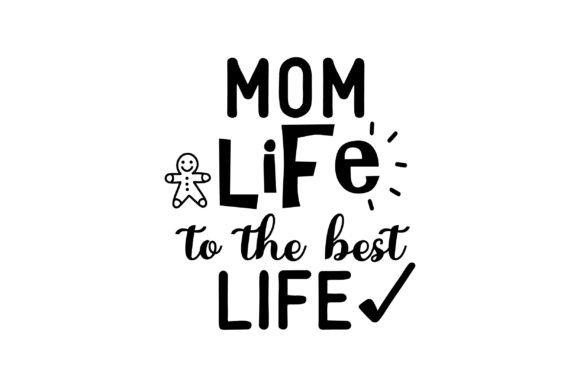
Mom Life to the Best Life
A Design That Smiles Back—Before You Even Stitch It
First impression? Mom Life to the Best Life lands with warmth—not cloying, not ironic, but grounded. It’s got that gentle curve of a handwritten phrase, soft edges, and just enough visual rhythm to feel intentional without being fussy. As an embroidery designer who’s stitched hundreds of “mom”-themed pieces for Etsy shops, boutique baby lines, and custom gift orders, I immediately saw where this one fits: on a linen tea towel folded neatly beside a coffee maker, on the chest of a relaxed-fit sweatshirt worn to preschool pickup, or as a small embroidered patch sewn onto a denim tote. It doesn’t shout—it invites. And that matters more than you’d think when your customer is scrolling through 47 similar listings at 9 p.m. after bedtime.
Where It Shines (and Where It Needs a Little Help)
This design works beautifully for custom apparel like crewneck sweatshirts and lightweight cotton tees—especially when paired with a medium-weight cutaway stabilizer. The letterforms have breathing room, and the spacing between “Mom Life” and “to the Best Life” gives the machine embroidery design room to breathe in satin stitch without crowding. I tested it on a midweight French terry hoodie: clean, legible, and soft to the touch—no stiff thread buildup.
It also translates well to embroidered patches and tote bag designs. On twill fabric, the slight weight of the fill stitch holds up nicely, and the overall width (roughly 3.5–4 inches wide depending on scaling) fits comfortably within standard 4x4 hoops—ideal for small shop owners stitching in batches. For baby embroidery, I scaled it down to 2.75" on a onesie front: still readable, still charming, though I recommend avoiding the smallest size on ribbed knit—too much stretch can blur the subtlety of the curves.
That said, Mom Life to the Best Life isn’t built for every surface. Skip it on curved surfaces like caps unless you’re using a specialized cap frame and dense stabilizer—those gentle arcs lose definition under tension. Avoid it on thin fabric like chiffon or lightweight rayon without heavy backing; the fill stitch density (while moderate) can show through or cause puckering. And on dark fabric, test your thread colors first—light cream or heather gray thread reads softly, but true white pops with confidence. Always run a black-and-white mockup before finalizing your digital embroidery file preview.
Real Project, Real Feedback: The Tote Bag Test
Last week, I prepped a batch of canvas tote bags for a local mom-owned café’s Mother’s Day pop-up. I chose Mom Life to the Best Life for the front panel—not because it was trendy, but because it felt *true*. After stitching, customers paused. Not just glanced. Paused. One woman smiled and said, “That’s exactly how I feel on the days I actually drink my coffee hot.” That kind of quiet resonance? That’s the difference between decoration and connection.
The design held up across three fabric types: natural canvas, unbleached cotton duck, and a textured linen-cotton blend. On the linen, I added a light tear-away stabilizer underneath and switched to a 75/11 sharp needle—no skipped stitches, no thread breaks. The result looked handmade, not mass-produced. That authenticity lifts perceived value—critical for handmade product pricing and Etsy seller trust.
Design Assets That Earn Their Keep
What makes Mom Life to the Best Life more than just another digital embroidery file? It’s versatile without being vague. It’s sweet without slipping into cliché. And crucially, it scales cleanly across formats—SVG, DXF, EPS, PNG, JPEG—so whether you’re prepping a printable mockup for your Shopify store or importing into Wilcom for digitizing adjustments, the vector integrity stays intact.
For craft business owners, that means fewer redraws, faster turnaround, and consistent branding across products: same phrase on a pillow cover, a baby blanket tag, and a holiday embroidery hoop kit—all feeling like part of a thoughtful collection, not a grab-bag of clipart.
Practical Notes Before You Stitch
- Test first—always run a sample on scrap fabric matching your final project’s weight and stretch.
- Check stitch density in your embroidery software—if it’s over 12,000 stitches, consider simplifying small flourishes for wearables.
- Confirm hoop size: This design fits comfortably in 4x4 and 5x7 hoops at standard scale—but verify before hooping.
- Inspect corners and curves: Look for tiny gaps or overlapping paths in the vector files—especially in the lowercase “g” and “y.” Clean vectors = cleaner stitches.
- Use proper stabilizer: Cutaway for knits, tear-away for stable wovens, fusible for lightweight linens.
- Review licensing: Since this is a Graphics-category Crafts asset, confirm whether commercial use (e.g., selling finished embroidered totes) is permitted before listing on Etsy or at craft fairs.
Final Thought: It’s Not Just a Phrase—It’s a Vibe You Can Stitch
Mom Life to the Best Life doesn’t try to be everything. It’s not bold enough for a gym shirt, too warm for corporate swag, and too gentle for sarcastic irony. But for the personalized gift buyer seeking sincerity, the small shop product owner building a cohesive line, or the creative entrepreneur who values clarity over clutter—it lands with quiet precision. It reminds us that good embroidery design isn’t about complexity. It’s about choosing the right line, the right space, the right pause—and trusting that someone will feel seen when they see it stitched, not just printed.